
Blog
Beginner’s Guide to SEO in 2026 (Step-by-Step for Businesses & Startups)

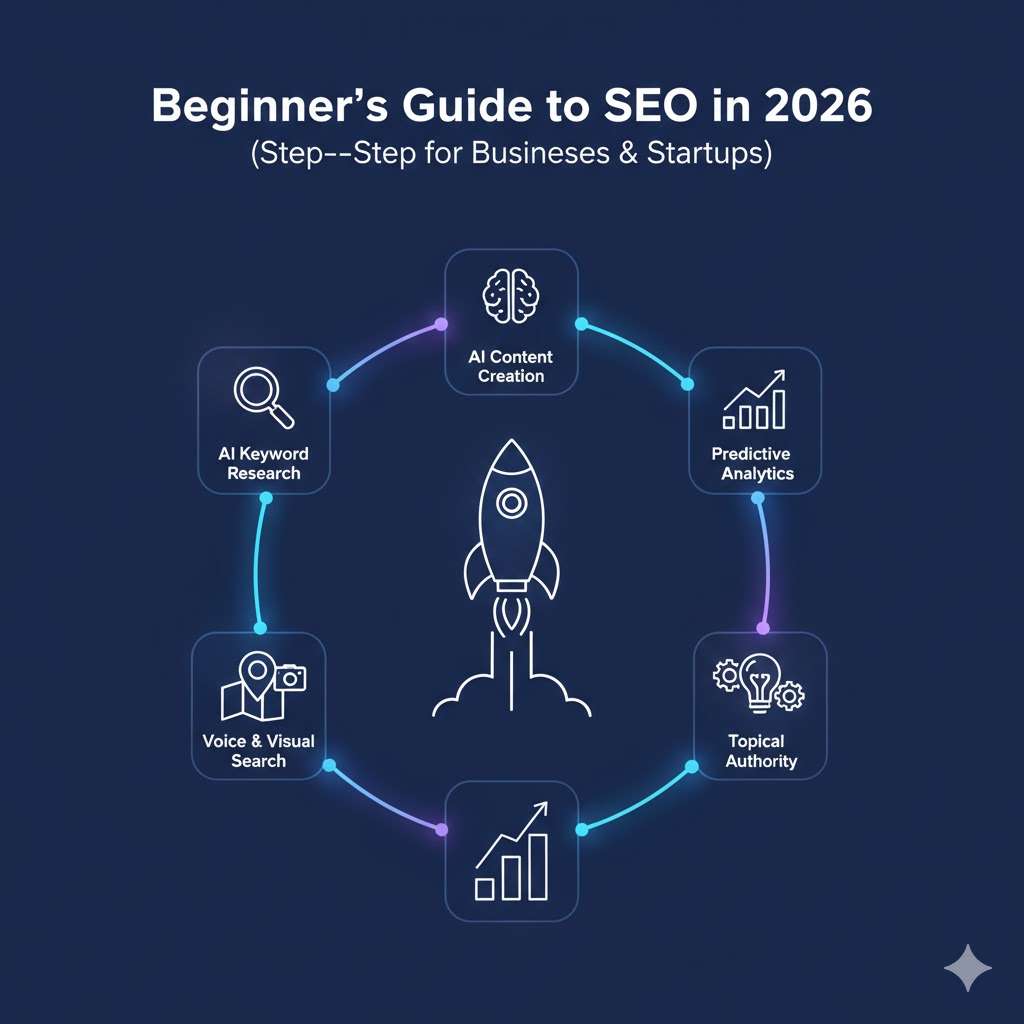
If you’re a business owner, startup founder, or entrepreneur looking to grow online, this beginner-friendly SEO guide will show you exactly how to rank on Google in 2026.
At Arunnn.com, we help businesses increase organic traffic, generate leads, and build long-term digital authority using proven SEO strategies.
Let’s break it down step by step.
Beginner’s Guide to SEO in 2026: Step-by-Step for Businesses.
SEO (Search Engine Optimization) is the process of optimizing your website to rank higher on Google for relevant keywords your customers are searching for.
In 2026, SEO is about:
Search intent
Content quality
Technical performance
Authority & backlinks
AI-powered search visibility
Local SEO optimization
If done correctly, SEO becomes your most cost-effective long-term marketing strategy.
Step 1: Understand Search Intent Before Writing Content
Google ranks pages based on what users really want.
There are four main types of search intent:
Informational – “What is SEO?”
Commercial – “Best SEO services for startups”
Transactional – “Hire SEO expert in Hyderabad”
Navigational – Searching for a specific brand
👉 If you offer SEO services, don’t just target “SEO.”
Target:
“Affordable SEO services for small businesses”
“SEO expert in Hyderabad”
These keywords attract buyers, not just visitors.
Step 2: Smart Keyword Research Strategy for 2026
To rank your website, focus on:
Long-tail keywords (4–6 words)
Local keywords (city + service)
Low-competition opportunities
Problem-based keywords
Example Keyword Clusters for Arunnn.com:
Primary Keywords:
SEO services in Hyderabad
Affordable SEO services India
Supporting Blog Topics:
How SEO helps small businesses grow
On-page SEO checklist for beginners
Technical SEO guide for startups
Local SEO strategy for 2026
Use tools like:
Ahrefs
SEMrush
Ubersuggest
Step 3: Create High-Authority Content (Google’s E-E-A-T Rule)
Google ranks content that shows:
Experience
Expertise
Authoritativeness
Trustworthiness
To improve this:
✅ Add real case studies
✅ Show results (traffic growth, rankings)
✅ Add author bio
✅ Include internal links to service pages
✅ Update content every 3–6 months
Long-form content (1,500–2,000 words) performs better for competitive keywords.
Step 4: On-Page SEO Optimization Checklist
Every blog post on Arunnn.com should include:
Primary keyword in title
Keyword in first 100 words
Optimized meta description (150–160 characters)
Clean URL (example: /seo-guide-2026)
Internal links to:
SEO Services page
Digital Marketing services
Image alt text with keywords
Fast loading speed
Mobile-friendly design
Step 5: Technical SEO Essentials
Without technical optimization, rankings suffer.
Checklist:
XML Sitemap submitted to Google Search Console
Robots.txt configured properly
No broken links
HTTPS enabled
Core Web Vitals optimized
Structured data (Schema markup)
Fast hosting server
Technical SEO builds the foundation for organic growth.
Step 6: Build Quality Backlinks (Authority Growth)
Backlinks remain one of the top ranking factors in 2026.
Ways to build backlinks:
Guest posting on marketing blogs
Publishing SEO case studies
Listing in high-quality business directories
Digital PR outreach
Creating shareable guides
Focus on earning backlinks from relevant websites — not spam directories.
Step 7: Optimize for Local SEO (High Conversion Strategy)
If you serve local businesses, local SEO is powerful.
To rank for “SEO services in Hyderabad”:
Optimize Google Business Profile
Collect genuine client reviews
Use city-based keywords
Add location-specific landing pages
Maintain consistent NAP (Name, Address, Phone)
Local SEO brings high-intent leads.
Step 8: Track & Improve Performance
SEO is continuous optimization.
Track:
Organic traffic
Keyword rankings
Conversion rate
Page speed
Bounce rate
Use:
Google Analytics
Google Search Console
Update blog posts regularly to maintain rankings.
How Long Does SEO Take to Show Results?
New website: 4–6 months
Moderate competition: 6–9 months
Competitive industries: 9–12 months
SEO is a long-term investment — but once rankings grow, traffic becomes consistent and scalable.
Frequently Asked Questions (Optimized for Featured Snippets)
What is SEO in simple words?
SEO is the process of improving your website to rank higher on Google so customers can find your business online.
Is SEO still worth it in 2026?
Yes. SEO remains one of the highest ROI digital marketing strategies because it generates consistent organic traffic.
How much does SEO cost in India?
SEO costs vary based on competition, industry, and goals. Small businesses typically invest monthly for sustainable growth.
Can small businesses rank on Google?
Yes. With proper keyword research, local SEO, and quality content, small businesses can outrank larger competitors.
Final Thoughts: Why SEO Matters for Your Business
In 2026, SEO is not optional — it’s essential.
If you want:
More website traffic
Better brand authority
Consistent leads
Lower marketing costs
Then SEO must be part of your digital strategy.
If you’re looking for professional SEO services, visit Arunnn.com to learn how we help businesses grow organically.