
Internet Marketing
Website Redesign vs. New Website: Which Is Better for a Small Business? | arunnn
Sep
A small business website does not always need to be replaced completely. In many cases, a focused redesign can improve trust, mobile usability, speed, and lead generation without the cost of rebuilding every page. In other situations, an old platform or confusing structure makes a new website the better investment.
The right decision depends on your current website, your goals, and how much of the existing foundation is still useful. This guide explains the practical differences between a website redesign and a new website project so you can choose with more confidence.
What Is the Difference Between a Redesign and a New Website?
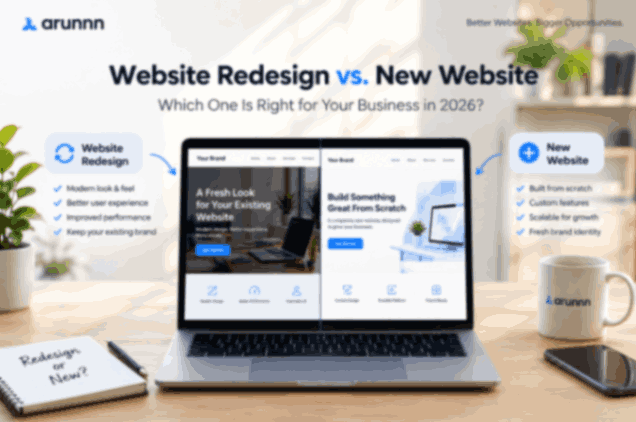
A redesign keeps at least part of the existing website structure, content, domain, or platform while improving the experience. A new website usually involves a fresh structure, updated technology, and a more complete rebuild.
The two approaches can overlap. A redesign may include new templates, revised copy, better calls to action, and improved SEO. A new website may still preserve your domain, best-performing pages, and existing brand assets.
Choose a Redesign When the Foundation Still Works
A redesign is often the practical choice when your domain has useful history, your website platform is still supported, and the main problems are visual or structural.
- Your current pages already attract some visitors.
- Your branding is still relevant but the design feels dated.
- The site works, but it is difficult to use on mobile devices.
- You need clearer navigation, better calls to action, or improved page layouts.
- You want to control the budget and improve the site in stages.
For many businesses, this approach delivers a more professional result while keeping the project focused. It can also support a low cost website design plan when unnecessary features are removed from the scope.
Start a New Website When the Existing Platform Holds You Back
A new website is usually a better fit when the current platform is difficult to maintain, the content structure is confusing, or important business goals cannot be supported without workarounds.
- The site is not secure or no longer receives platform updates.
- Pages load slowly because of outdated themes, plugins, or code.
- The website is difficult to edit without technical help.
- The navigation and page structure no longer match your services.
- You want to add online sales, bookings, or other features the current setup cannot handle well.
If you plan to sell products online, review the key selection factors in our ecommerce web design company guide before choosing the platform and project scope.
Compare the Total Cost, Not Only the Starting Price
A redesign may cost less at the beginning because some assets can be reused. However, keeping a weak platform can create higher maintenance costs later. A new website may require more planning upfront, but it can reduce repeated fixes and make future updates easier.
Ask what is included in the proposal: page planning, content migration, mobile layouts, redirects, analytics, forms, basic SEO, testing, and post-launch support. A clear scope makes it easier to compare providers and avoid paying for features you do not need.
Protect SEO During Either Type of Project
Changing a website can affect search visibility if URLs, page titles, internal links, or content are handled carelessly. Keep a record of important pages before work begins, map old URLs to new ones when needed, and review the site after launch.
Keyword research should also guide the new structure. Our article on why keywords still matter for SEO explains how search language can shape page planning and content decisions.
Review the Website From a Customer’s Point of View
Whether you redesign or rebuild, the finished website should make it easy for a visitor to understand what you offer, trust your business, and take the next step.
- Can a new visitor understand the main offer quickly?
- Are the most important services easy to find?
- Does the site work comfortably on a phone?
- Are contact forms and phone or email actions easy to use?
- Do the pages answer common buying questions?
If your current site is close to working but needs clearer messaging and better structure, a redesign may be enough. If every important interaction feels difficult, a fresh build may save time in the long run.
How to Decide in One Simple Review
List the parts of your current website that are worth keeping: domain, content, rankings, brand assets, customer data, and useful integrations. Then list the problems that cannot be solved efficiently within the existing setup.
If the keep list is strong and the problem list is manageable, choose a redesign. If the problem list affects the platform, security, structure, and future growth, consider a new website project. You can also compare the broader options available through our website and digital services page or contact arunnn to discuss the scope.
Final Thoughts
A redesign and a new website can both be good decisions. The better option is the one that matches your current foundation, business goals, and realistic budget. Focus on usability, mobile experience, SEO protection, maintainability, and future growth rather than choosing based only on the visual appearance of the homepage.
