
Internet Marketing
Website Redesign vs. New Website: Which Is Better for a Small Business? | arunnn
Sep
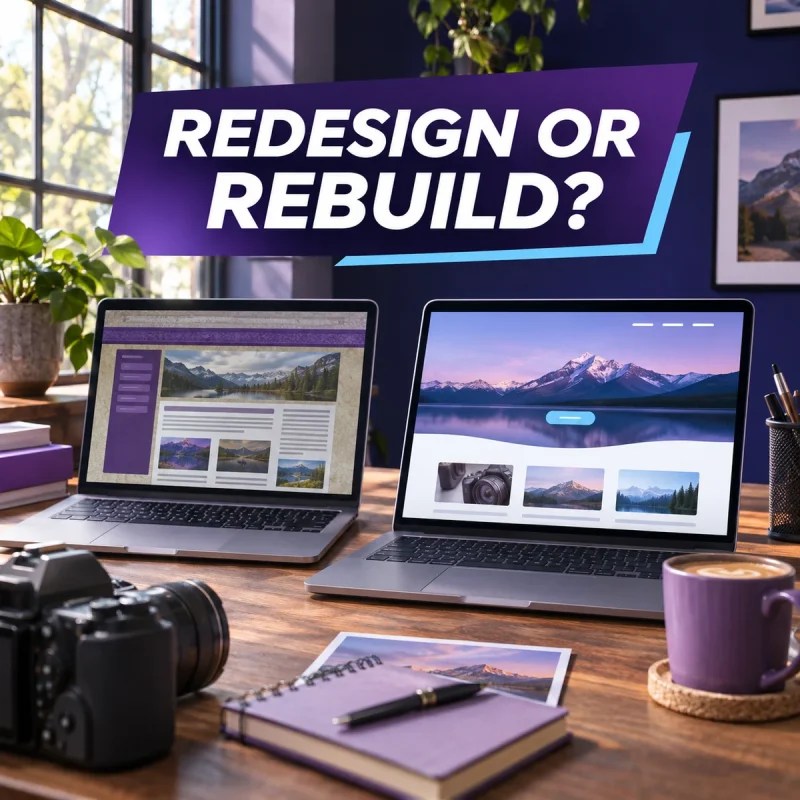
Choosing a website redesign vs. a new website starts with one question: does your existing site still support the features your customers need? In many cases, a focused redesign can improve trust, mobile usability, speed, and lead generation without the cost of rebuilding every page. In other situations, an old platform or confusing structure makes a new website the better investment.
The right decision depends on your current website, your goals, and how much of the existing foundation is still useful. This guide explains the practical differences between a small business website redesign and a new website project so you can choose with more confidence.
Small Business Website Redesign or Rebuild?
| What you’re seeing | Where to start |
|---|---|
| Dated visuals, cramped mobile layouts, or hard-to-find contact buttons | Redesign. Improve the pages customers use most. |
| Useful pages still bring enquiries, but navigation is confusing | Redesign. Keep useful URLs and improve menus and calls to action. |
| Your platform is unsupported or cannot handle a feature you need | Consider a rebuild. Plan content migration and redirects before launch. |
| You want to add booking or online sales | Check the current setup. Extend it if it can handle that workflow reliably. |
Arunnn Project Example: KZAM Towing
Customers visiting the KZAM Towing website need to call for help or request a quote. Arunnn organized the site around those two actions, with service and coverage pages and a quote form that collects vehicle and route details. If your existing platform can support that kind of enquiry flow, start by improving the relevant pages. See the KZAM Towing website case study for the project scope.
What Is the Difference Between a Redesign and a New Website?
A redesign keeps at least part of the existing website structure, content, domain, or platform while improving the experience. A new website usually involves a fresh structure, updated technology, and a more complete rebuild.
The two approaches can overlap. A redesign may include new templates, revised copy, better calls to action, and improved SEO. A new website may still preserve your domain, best-performing pages, and existing brand assets.
Choose a Redesign When the Foundation Still Works

A redesign is often the practical choice when your domain has useful history, your website platform is still supported, and the main problems are visual or structural.
- Your current pages already attract some visitors.
- Your branding is still relevant but the design feels dated.
- The site works, but it is difficult to use on mobile devices.
- You need clearer navigation, better calls to action, or improved page layouts.
- You want to control the budget and improve the site in stages.
For many businesses, this approach delivers a more professional result while keeping the project focused.
Start a New Website When the Existing Platform Holds You Back

A new website is usually a better fit when the current platform is difficult to maintain, the content structure is confusing, or important business goals cannot be supported without workarounds.
- The site is not secure or no longer receives platform updates.
- Pages load slowly because of outdated themes, plugins, or code.
- The website is difficult to edit without technical help.
- The navigation and page structure no longer match your services.
- You want to add online sales, bookings, or other features the current setup cannot handle well.
If you’re starting with a simple business site, compare our affordable website design from ₹499 per page. If you plan to sell products online, review the key selection factors in our ecommerce web design company guide before choosing the platform and project scope.
Compare the Total Cost, Not Only the Starting Price
A redesign may cost less at the beginning because some assets can be reused. However, keeping a weak platform can create higher maintenance costs later. A new website may require more planning upfront, but it can reduce repeated fixes and make future updates easier.
Ask what is included in the proposal: page planning, content migration, mobile layouts, redirects, analytics, forms, basic SEO, testing, and post-launch support. A clear scope makes it easier to compare providers and avoid paying for features you do not need.
Protect SEO During Either Type of Project
Changing a website can affect search visibility if URLs, page titles, internal links, or content are handled carelessly. Keep a record of important pages before work begins, map old URLs to new ones when needed, and review the site after launch.
Keyword research should also guide the new structure. Our article on why keywords still matter for SEO explains how search language can shape page planning and content decisions.
Review the Website From a Customer’s Point of View
Whether you redesign or rebuild, the finished website should make it easy for a visitor to understand what you offer, trust your business, and take the next step.
- Can a new visitor understand the main offer quickly?
- Are the most important services easy to find?
- Does the site work comfortably on a phone?
- Are contact forms and phone or email actions easy to use?
- Do the pages answer common buying questions?
If your current site is close to working but needs clearer messaging and better structure, a redesign may be enough. If every important interaction feels difficult, a fresh build may save time in the long run.
How to Decide in One Simple Review
List the parts of your current website that are worth keeping: domain, content, rankings, brand assets, customer data, and useful integrations. Then list the problems that cannot be solved efficiently within the existing setup.
If the keep list is strong and the problem list is manageable, choose a redesign. If the problem list affects the platform, security, structure, and future growth, consider a new website project.
Final Thoughts
A redesign and a new website can both be good decisions. The better option is the one that matches your current foundation, business goals, and realistic budget. Focus on usability, mobile experience, SEO protection, maintainability, and future growth rather than choosing based only on the visual appearance of the homepage.

Pingback: Your Website Is Now Being Read by AI: What Small Businesses Should Change in 2026 | arunnn - A RUN
Pingback: Low Cost Website Design at ₹499: What's Included - A RUN
Pingback: Mobile Website Enquiry Test: A 60-Second Check | arunnn
Pingback: How Many Pages Does a Small Business Website Need?